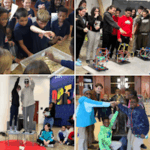
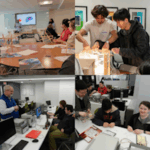
The week of Oct 20-24 was Massachusetts STEM Week 2025 (mass.gov link). This year’s focuses on “STEM starts now”: at any age you can learn about STEM, from our youngest learners to adult learners, and STEM educational opportunities and jobs are here at this very moment in Massachusetts.
As part of this week, we wanted to provide local Boston high school students an opportunity to learn about STEM and STEM opportunities. As such, on Thursday, October 23rd, we partnered with the Boston Private Industry Council (BostonPIC) and Wentworth Institute of Technology and invited students from the Fenway High School and the O’Bryant High School for a day of hands-on engineering activities.
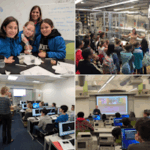
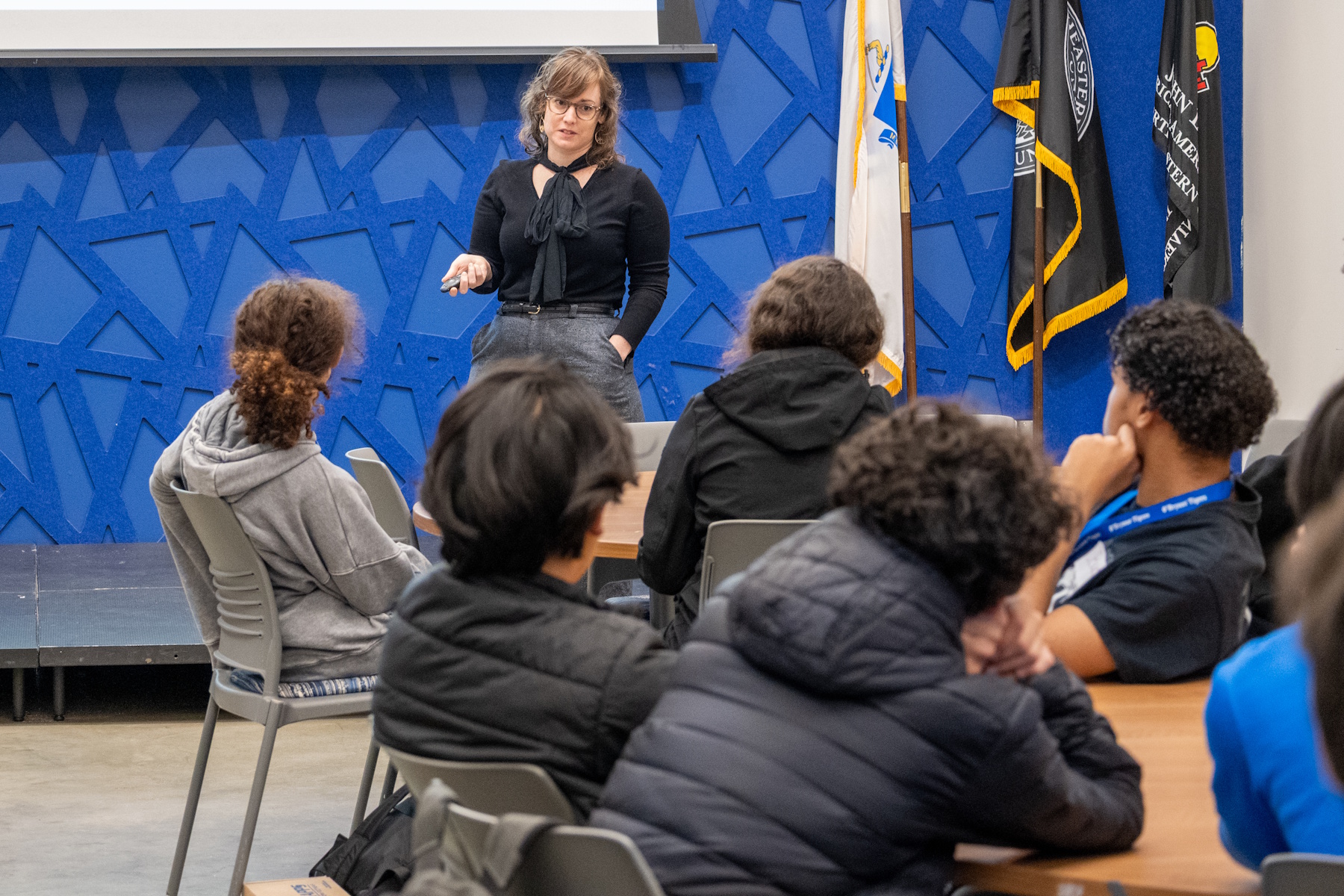
The day started off with an introduction by NEU Associate Dean Richard Harris, who talked about the importance of motivation and pushing yourselves to achieve what you want to achieve. He introduced the concept of “Time, Talent, Treasure”: you only have so much time, so you need to figure out how best to use it, you can foster and improve your talent, and you need to decide what your treasure is and what you will be striving for.
Next, Bec Nuske from the BostonPIC (who works with Fenway/O’Bryant schools) talked to students about potential job and internship opportunities through the PIC and how to find them. My key takeaway was that in order to find summer jobs, students should start looking in January, and have finalized their plans by April at the latest.

O’Bryant School visits NEU in celebration of MA STEM Week!
Students then split into two groups and alternated activities:
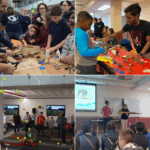
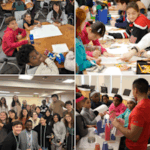
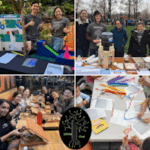
One activity was offered by CEE Professor Michael Kane and Christopher Dankwah, who led a session on Tiny Solar Houses, in which students pick from a variety of materials to improve the insulation of a small home and increase the internal temperature within their homes (which are heated by a 43W incandescent light bulb). Options included tin foil, foam insulation, tape, a metal block to help absorb heat, a 53W light bulb, etc. Base temperatures within the home (with just the light bulb) were ~72 degrees (F), whilst the best insulated homes, after purchasing and building their insulation, were 103 degrees. The most interesting thing I learned this day is the insane inefficiency of lightbulbs generation of light. How much light do you think a 43 Watt incandescent light bulb, which produces light by heating a filament until it glows, produces? 40W? 30W? 20W? No – it’s just 0.4W of light (9.3%) that is produced, the other 90.7% is lost to heat. This is also why originally “Easy-Bake Ovens” used ordinary incandescent lightbulbs as their heat source. Modern LEDs have improved upon this efficiency, but still are only 10-20% efficient.
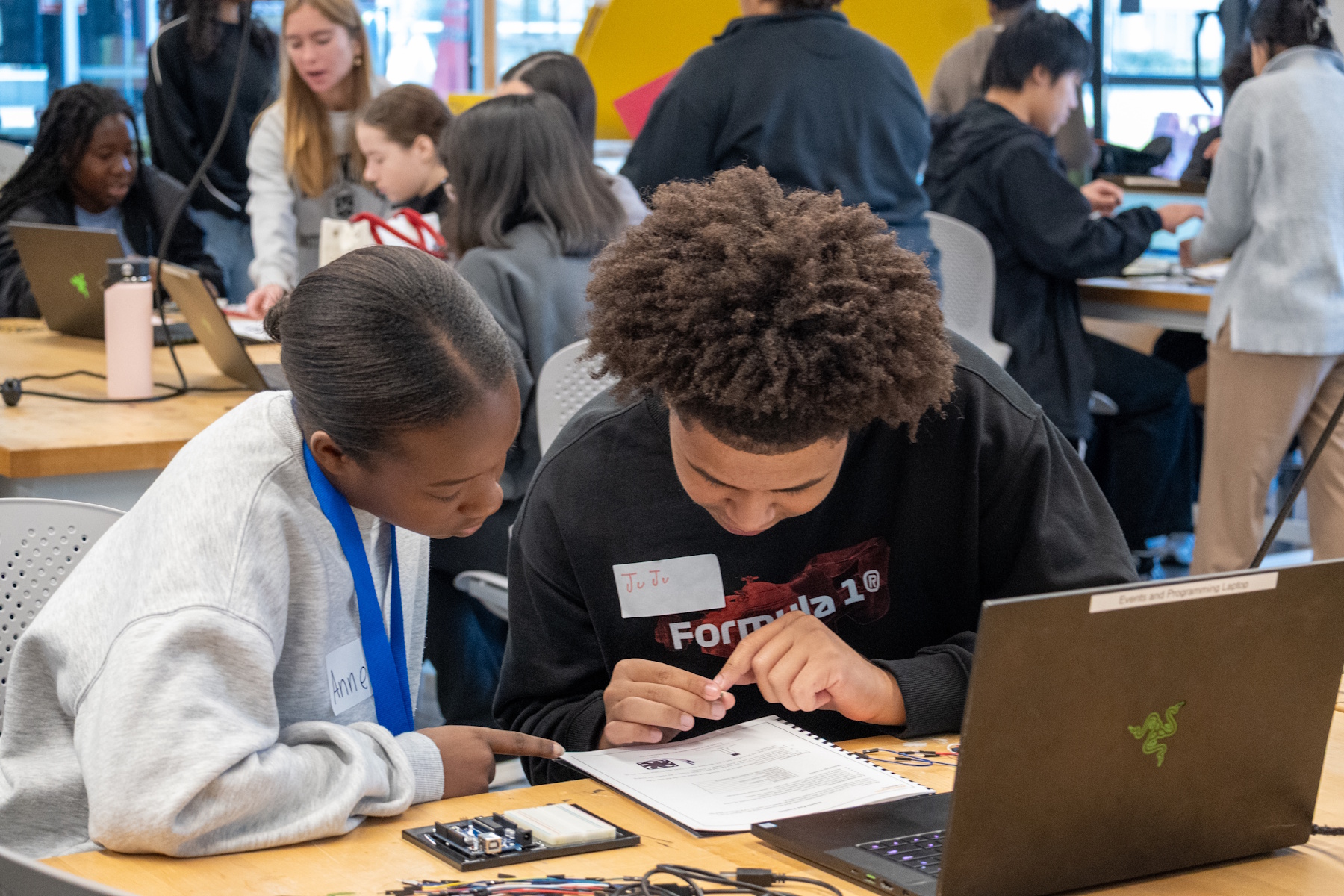
The second activity was a hands-on Arduino / computer science activity at Wentworth’s Accelerate Makerspace, led by electrical engineering Professor Afsaneh Ghanavati, with assistance from Wentworth electrical engineering students. In this activity, students were introduced to arduino circuits and programming.
During lunch, we hosted a STEM/College 101 panel, with Michael and Sam as NEU representatives and Erik and Katherine as Wentworth representatives.
-

- WIT ECE student helps students build a breadboard

-

- O’Bryant students work together to build an Arduino circuit

-
- Fenway and O’Bryant students work together to build a fan control system
-

- BostonPIC coordinator for Fenway/O’Bryant talks about job and internship opportunities for Boston students
-

- NEU students Chris and Sam “sell” materials to groups to insulate their tiny houses as best as possible

-

- High school students insulate their house with tin foil

-

- Students examine the plotted results of their insulation after 10 minutes

-

- Professor Michael Kane helps a student upgrade their tiny house with a 53W lightbulb

-

- Professor Jen Love hears about a group’s plans for improving the insulation of their tiny home

-

- NEU Assoc. Dean Richard Harris welcomes students to campus

-

- Michael, Sam, Erik, and Katherine answer students’ questions about college and STEM

-

- WIT professor introduces students to building Arduino circuits on breadboards